



Five Things That Make Matcha Special
Matcha has quickly moved from Japanese tea tradition into everything from lattes and smoothies to baking and functional foods.
But what actually makes matcha different from ordinary green tea?
We read an interesting research review about matcha’s composition and the substances that have made it so interesting to scientists. Matcha contains catechins, caffeine and the amino acid L-theanine, among other compounds. But what makes it special begins even earlier, with how the tea plant is grown and how the leaves are used.
Read the research review about matcha
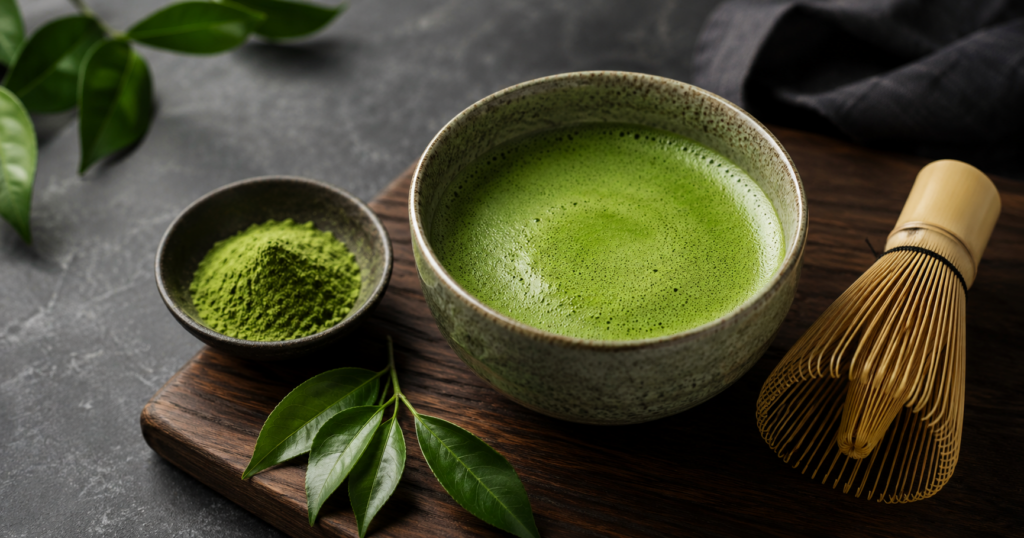
Here are five things we took away.
1. Matcha Is Grown in a Special Way
Matcha comes from the same tea plant as ordinary green tea, Camellia sinensis. One important difference is how it is grown.
During the weeks before harvest, the tea plants are shaded from direct sunlight. This changes the composition of the leaves and contributes to higher levels of compounds including chlorophyll and L-theanine.
Shading also helps create matcha’s characteristic flavour: rich, green and slightly bitter, but also smooth and naturally high in umami.
After harvesting, the leaves are steamed, dried and ground into a very fine powder.
2. You Consume the Whole Tea Leaf
When ordinary green tea is brewed, the leaves are steeped in water and then discarded.
With matcha, the finely ground leaf is whisked directly into water or mixed into food. This means that you consume the whole tea leaf.
As a result, matcha provides a more concentrated source of the tea leaf’s natural compounds than an ordinary cup of green tea. These include polyphenols, chlorophyll, caffeine and L-theanine.
The amount you consume will of course depend on the portion size and the quality of the matcha.
3. Matcha Contains Catechins and EGCG
Green tea is rich in a group of polyphenols known as catechins. The best known of these is EGCG, or epigallocatechin gallate.
Catechins have been studied for their antioxidant and inflammation-regulating properties. Antioxidants help the body manage free radicals and oxidative stress, which arise naturally through metabolism and are also influenced by lifestyle and the environment.
Because the whole leaf is consumed, matcha is a concentrated source of these plant compounds.
That does not mean that matcha alone determines our health. But it is one of the reasons why green tea and matcha have become part of many people’s daily routines.
4. Caffeine and L-Theanine Make an Interesting Combination
Matcha naturally contains caffeine, usually more than ordinary green tea but less than a cup of coffee.
At the same time, it contains L-theanine, an amino acid found naturally in tea leaves.
Caffeine is associated with alertness and sharper attention, while L-theanine has been studied in relation to relaxation and concentration. Human studies have found interesting effects from the combination on attention and mental performance.
This may help explain why many people describe matcha as providing focused energy rather than stimulation alone.
How strongly this is felt varies from person to person and also depends on how much matcha is consumed.
5. Matcha’s Plant Compounds Also Meet the Microbiome
Not all of matcha’s plant compounds are absorbed directly in the small intestine.
Some continue into the large intestine, where they meet the gut microbiome. Microorganisms can break down catechins and other polyphenols into new compounds, while the tea’s plant substances can also influence the environment in which those microorganisms live.
A small randomised study has also found that daily matcha intake affected the composition of participants’ gut microbiota.
Research into matcha and the microbiome is still relatively new, but the connection is interesting: what we eat affects the microbiome, and the microbiome in turn influences how certain plant compounds are processed.
Why We Chose Real Matcha for GO100
When we developed GO100, we wanted to use real ingredients to create each flavour.
For Real Matcha, we therefore chose genuine matcha powder rather than an artificial flavour designed to imitate green tea.
Matcha contributes its natural green colour and its characteristic combination of freshness, mild bitterness and umami. The flavour works particularly well with GO100’s base of dates and tiger nuts.
For us, matcha is more than a fashionable flavour. It is an ingredient with a long tradition, a distinctive production process and an unusually interesting composition.
What Did We Take Away?
Matcha is green tea, but it is grown, processed and used in a way that makes it different from an ordinary cup of tea.
What makes matcha special is the combination:
- the tea plants are shaded before harvest,
- the whole leaf is consumed,
- it contains catechins such as EGCG,
- caffeine occurs together with L-theanine,
- and its plant compounds can also interact with the gut microbiome.
It is much more than just a green powder.
Frequently Asked Questions About Matcha
What Is Matcha?
Matcha is made from finely ground green tea leaves. The plants are shaded before harvest, and the leaves are then processed and ground into a vivid green powder.
What Is the Difference Between Matcha and Ordinary Green Tea?
With ordinary green tea, you drink an infusion made from the leaves. With matcha, you consume the entire ground tea leaf and therefore receive a more concentrated amount of its natural compounds.
Does Matcha Contain Caffeine?
Yes. Matcha naturally contains caffeine. The amount varies depending on quality, serving size and how the matcha has been produced.
What Is L-Theanine?
L-theanine is an amino acid found naturally in tea leaves. It has been studied in relation to relaxation, attention and its interaction with caffeine.
Is Matcha an Antioxidant?
Matcha contains several antioxidant plant compounds, particularly catechins such as EGCG. It is the compounds in matcha that have antioxidant properties.
Can Matcha Affect the Microbiome?
Polyphenols in green tea can reach the large intestine and be transformed by gut microorganisms. Early research suggests that matcha may also influence the composition of the gut microbiota.
Can You Consume Matcha Every Day?
Matcha can be included as part of a daily diet. Because it contains caffeine, people who are sensitive to caffeine may need to adjust the amount and timing.
Let us know what you think
Leave a commentLatest articles

4 Simple Morning Habits to Give Your Gut a Good Start
Four simple morning habits that can give your gut a better start to the day — without complicated routines or the need for a perfect breakfast.
Read now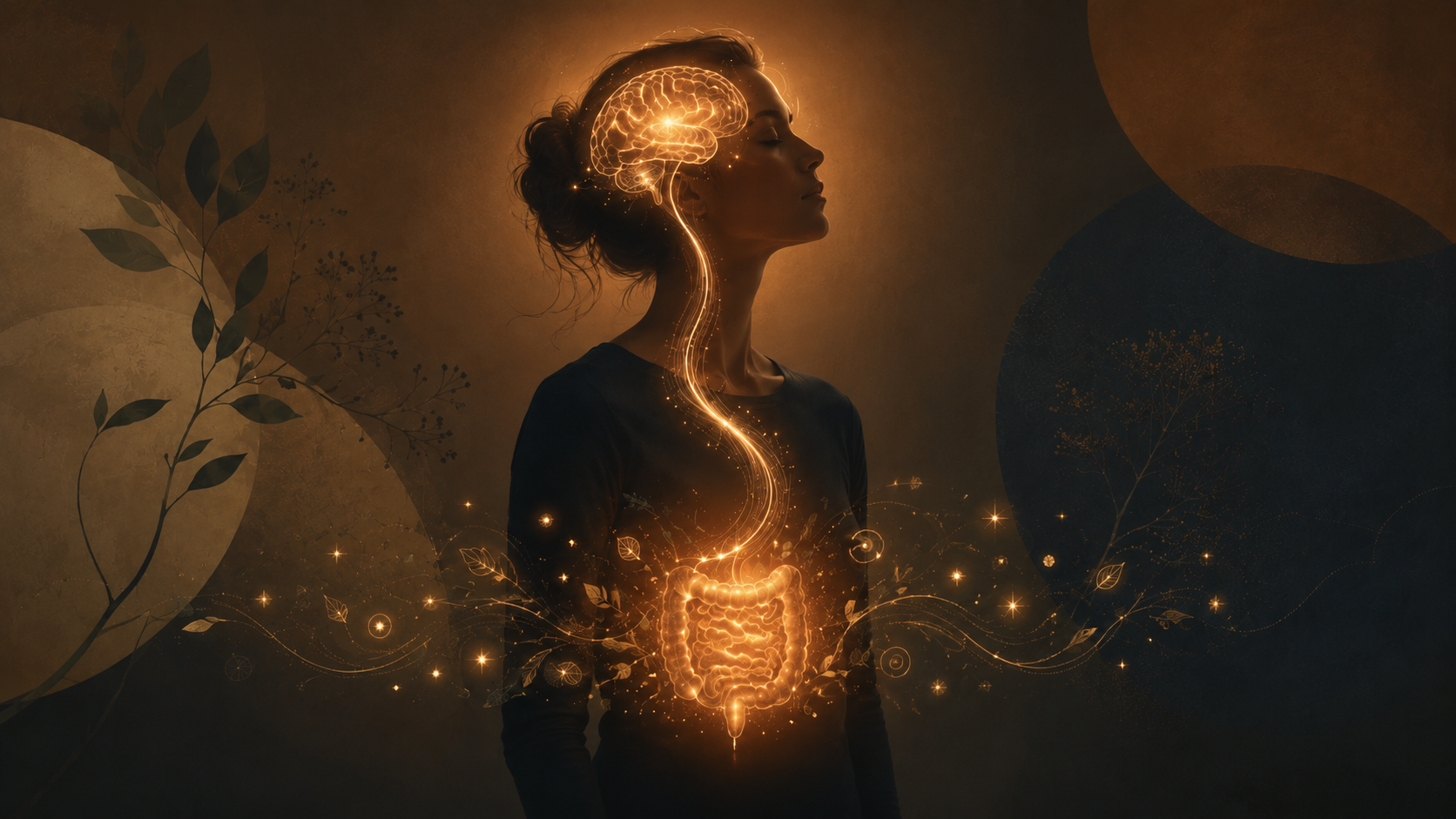
How the Brain and Gut Are Connected
The brain and gut communicate continuously. We explore the gut–brain axis, stress, the microbiome and why prebiotics are food for gut microorganisms.
Read now
How Are the Gut and the Immune System Connected?
The gut is more than a digestive organ. We explore the relationship between food, the microbiome and the immune system.
Read now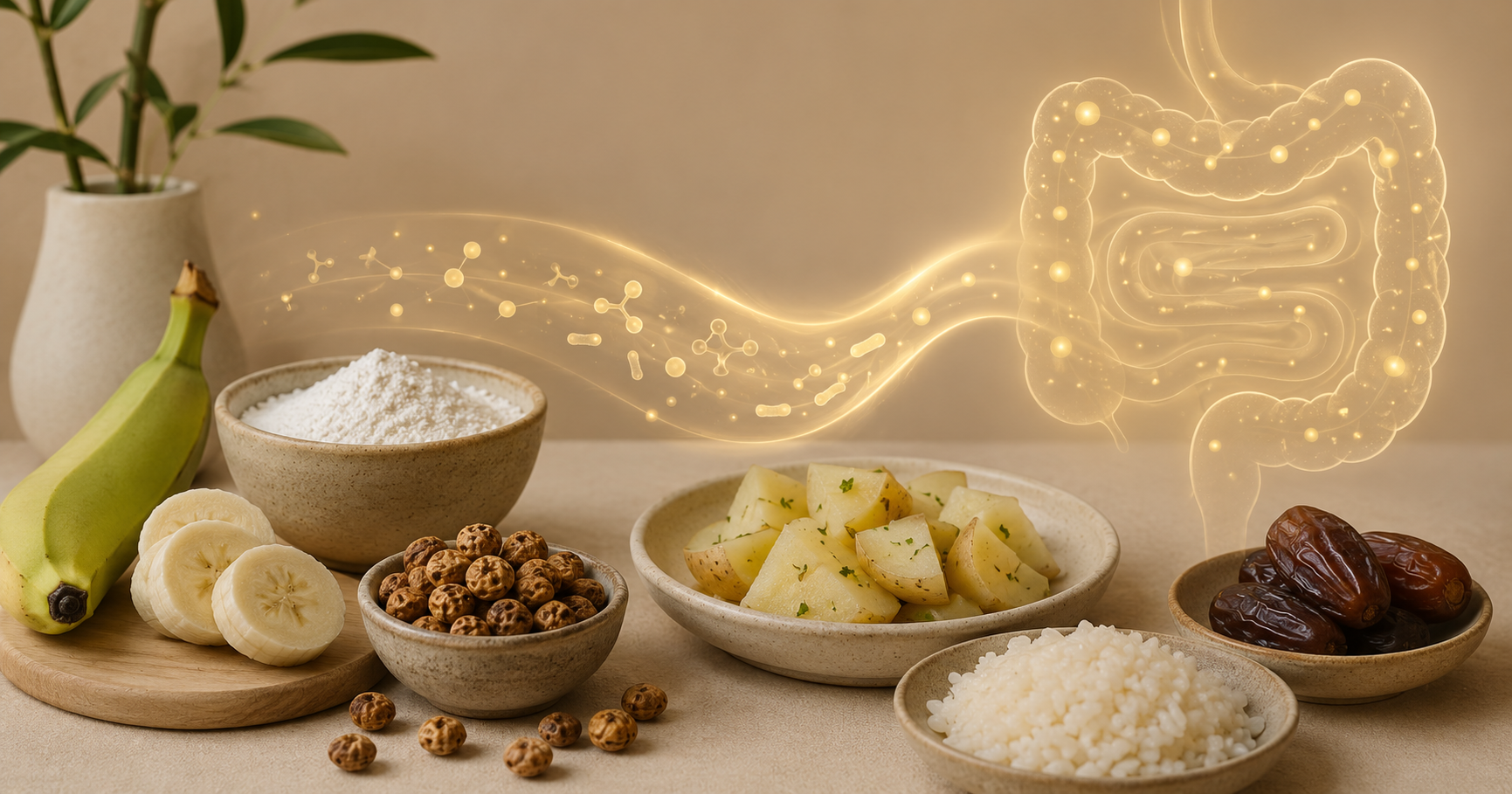
Resistant Starch Feeds Your Microbiome
Resistant starch follows a different route through the body. It feeds the microbiome, is partly converted into butyrate and provides fewer available calories. One GO100 bar contains 11 grams.
Read now